Family safety
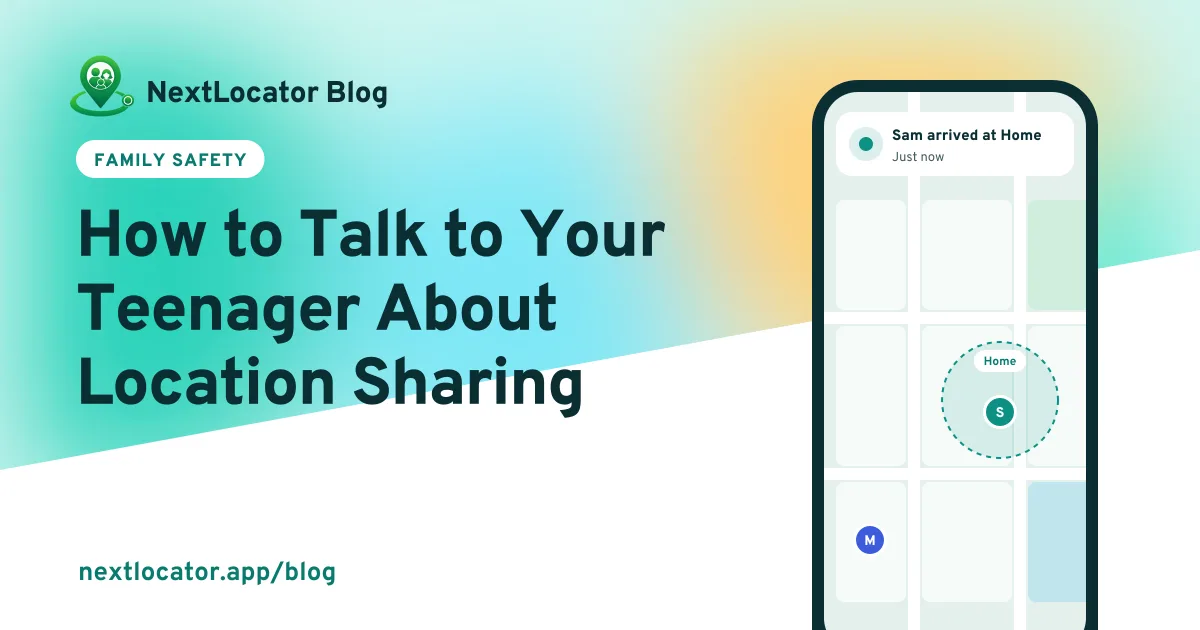
How to Talk to Your Teenager About Location Sharing
Teens push back on location sharing when it feels like spying. How to agree on it together, with rules that work for both of you and that they'll keep.
By NextLocator Team Updated 3 minute read
Quick answer
Talk about it before you install anything. Explain the reason (safety, not checking up), agree on when you will and won't look, and share your own location too. Teens who help set the rules are far less likely to switch sharing off or find a way around it.
Key takeaways
- Lead with why. 'I want to know you got home' lands better than 'I need to know where you are'.
- Share both ways. Parents belong on the map too.
- Agree on rules together, like checking only when they are late.
- Loosen the rules as they get older.
Why teenagers push back
To a 15-year-old, being watched feels like not being trusted. It isn't really about the app. It's about privacy and growing up, and they're right that both matter.
Teens who feel watched find workarounds. The phone stays at a friend's house. Airplane mode goes on. A second account appears. The aim isn't to win the argument. It's to agree on something they'll actually keep using.
Before the conversation
- Know your reason. The late coaching class? The walk home from the bus stop? Being able to help in an emergency? Be specific.
- Decide what you can offer back. More freedom, a later curfew, fewer check-in calls.
- Pick a calm moment. Not the night they came home late.
What to say
Some ways of putting it work better than others:
| Instead of | Try |
|---|---|
| "I need to know where you are at all times." | "I'd like to know you got there safely, so I don't have to keep calling." |
| "If you've got nothing to hide, why not?" | "I'll share mine too. We'll both be on the map." |
| "It's not up for discussion." | "Let's agree the rules together and look at them again in six months." |
Agree the rules together
- When you'll check. For example, only if they're more than 30 minutes late or not answering.
- Which alerts you'll use. An arrival alert for school and home is very different from watching the map all evening.
- What happens if it gets switched off. Agree it calmly now, so it isn't a fight later.
- When you'll review it. Every birthday is an easy reminder.
Share both ways
Join the same circle and share your location too. Teens notice quickly when rules only apply to them. It helps them as well: they can see you're on your way to pick them up, or stuck in traffic.
In NextLocator, everyone in a circle sees everyone else, and everyone can see who's in the circle. Nobody is hidden, which is how it should be.
As they get older
What suits a 12-year-old doesn't suit a 17-year-old. As they show they can handle more, ease off: fewer places, fewer checks, maybe sharing only on long trips. Once they're adults, it's their call. More on consent and the law.
Frequently asked questions
At what age should parents stop tracking their child's location?
There's no fixed age. Many families loosen the rules in the mid teens and leave it to the young person once they turn 18, when it's legally their choice in most countries.
Should I track my teenager without telling them?
No. Secret tracking usually ends with broken trust when they find out, and they almost always do. Agree it openly instead.
What if my teenager keeps turning location off?
Ask why. Often the rules feel too tight. Offer fewer checks or fewer places in exchange for keeping it on.
Is it okay to look through my teen's location history?
Only when you've agreed you will, for example if they're very late. Going through their whole day without a reason feels like spying to them.